
Skip to content
Overview Take part Leagues Regions Fees Register Equipment Questions
Overview The Championship Schedule Teams Venues Rules Team clothing Documents Past editions
Overview Volunteers Coaches Umpires Regional coordinators Everything else
Overview Safe sport Code of conduct VOG Respect the Game Confidential contact Report
Overview About History The foundation International Partners Photos For the media Contact

Player registration for 2027 is open!

Register your child
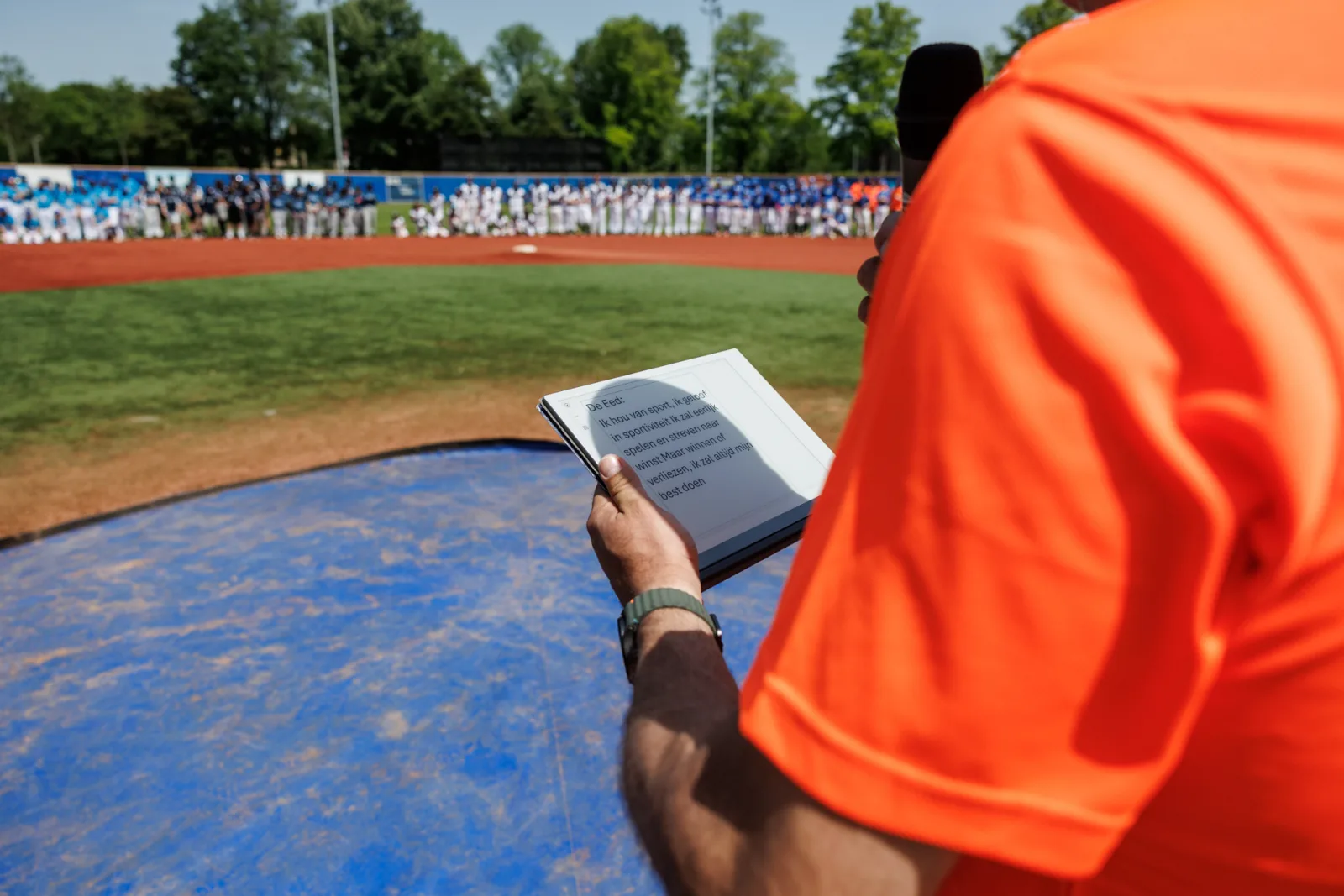
Someone opens the rule book beside the pitcher's mound.

Playing rules

The championship follows the playing rules of Little League International, with Dutch tournament adjustments. Those are in the tournament regulations, per sport and set anew every season. This page covers the essentials; this season's regulations are binding.

The regulations

Each season its own tournament regulations

The tournament regulations come in a baseball and a softball version and are set anew every year. Before the first game, the manager signs to confirm they know them. The Technical Meeting is the moment for questions; after that you can no longer protest with your own reading of a rule. The version for the 2027 season is with the documents.

Baseball tournament regulations

The complete rules for Littles, Intermediates, Juniors and Seniors baseball, with the Dutch adjustments.
To the documents

Softball tournament regulations

The complete rules for Littles, Juniors and Seniors softball, with the Dutch adjustments.
To the documents

Little League Playing Rules

The international rulebook, in English, updated every year. Where they differ, the rulebook wins, not our summary.
To littleleague.org

On a single sheet

The rules summary per sport

Every league side by side on one A4 sheet: game length, mercy rule, pitch counts and rest, substitutions, base running and equipment. Made to take into the dugout. It remains a summary; where they differ, the tournament regulations win.

PDF Rules summary baseball Dutch only download, 177 kB PDF Rules summary softball Dutch only download, 73 kB All documents for this edition

The basics

The core in short

What every player, parent or coach needs to know. The figures come from the 2025 tournament regulations; this season's regulations take precedence.

The game

  • Four innings per game. After 85 minutes no new inning starts.
  • No extra innings in the pool phase. Finals are played over more innings; that is fixed beforehand at the plate conference.
  • Mercy rule: 10 runs ahead after 2½ innings, 15 after 1½, 20 after 1 full inning.
  • Speed-up: play resumes within two minutes of an inning change. Otherwise a strike against the batter or a ball against the pitcher.

Points and standings

  • Win 2 points, tie 1, loss 0.
  • Level on points: first the head-to-head result, then the Team Quality Balance (TQB), then drawing lots.
  • A tie in a crossover semi-final or final goes to a tie-breaker; after that, the number of times a team reached third base counts.

Everyone bats

  • Littles, Intermediates and Juniors use a continuous batting order: every player present is in the batting order and bats in turn.
  • Defensive substitutions are always allowed. An injured player is skipped without penalty.
  • Seniors play with regular substitutions, re-entry and a designated hitter (baseball) or designated player and flex (softball).
  • Courtesy runner for pitcher and catcher with two outs, not for Seniors. Seniors have the special pinch runner.

Base running

  • Littles: no head-first sliding when advancing. Diving back to a base is allowed.
  • Avoid a collision with the catcher; the umpire may call the runner out.
  • The infield fly rule applies in all leagues.
  • An intentional walk may be announced by the defensive manager, at most once per player per game.

Safety

  • The catcher always wears a mask with throat guard, also when warming up a pitcher.
  • Warming up along the field only with a spotter wearing a glove. Coaches do not warm up pitchers.
  • A player acting as base coach wears a helmet.
  • Metal spikes only in Intermediates, Juniors and Seniors baseball and in Juniors and Seniors softball.

Equipment

  • Baseball Littles and Intermediates: USA bat or solid wooden bat up to 33 inches. Intermediates also BBCOR or wood up to 34 inches. Seniors: BBCOR or wood.
  • Softball: Littles up to 33 inches, Juniors and Seniors up to 34 inches, with a visible certification mark.
  • The coaching staff checks the equipment themselves; umpires no longer inspect beforehand. Batting with an illegal bat means out.
  • See also Equipment and Clothing.

Conduct and protests

  • Ten or more runs ahead means no more stealing bases.
  • Anyone ejected is suspended for at least one game. Aggression on the field means disqualification of the team.
  • Umpire decisions (judgement calls) are binding. A rules protest is made by the manager only, during the game; the Umpire in Chief or tournament director decides.

Around the game

  • The line-up goes to the umpire and the opponent ten minutes before the game. The home team provides the scorecard and game balls; both managers sign afterwards.
  • At most three coaches in the dugout and always at least one present. Every team has its own scorer. No bat boys.
  • The visiting team sweeps the field after the game.
  • No smoking at the sports park, e-cigarettes included. Alcohol only after 5 pm.

Pitchers

Pitch counts and rest

The rules that raise the most questions. The scorer keeps the pitch count, the coach signs for it.

Baseball

League Pitching distance
Littles 14 m
Intermediates 15.24 m
Juniors and Seniors 18.45 m
League Maximum per day
Littles 85 pitches
Intermediates age 11-12 85 pitches
Intermediates age 13-14 95 pitches
Juniors and Seniors 95 pitches
Rest Littles, Intermediates, Juniors Seniors
No rest day 0-20 pitches 0-30 pitches
One day of rest 21-35 pitches 31-45 pitches
Not available for further games 36 or more 46 or more
  • Never pitch three days in a row; pitch in one game per day at most. Juniors and Seniors may pitch in a second game after 30 pitches or fewer. Anyone who caught four innings or more does not pitch again that day; anyone who threw 41 pitches or more does not catch again that day.
  • At most two visits to the pitcher per inning. The second visit in the same inning and the third in the game mean a pitching change.

Softball

League Pitching distance
Littles 12.2 m
Juniors and Seniors 13.1 m
  • Littles: at most 12 innings per day. After 6 innings or fewer you may pitch again the next day; after 7 or more you may not.
  • Juniors and Seniors: no limit over the tournament.
  • One pitch in an inning counts as an inning pitched.
  • Two visits in one inning mean a pitching change; at most three visits per pitcher per game.
  • Leaping is allowed as long as both feet stay within the pitching plate and the back foot does not push off again. A crow hop is an illegal pitch: one ball.

In a thunderstorm

The field is cleared and play resumes no earlier than thirty minutes after the last thunderclap. The umpire decides, not the coach.

Become an umpire?

Umpires officiate the games at the championship. Training starts in spring and no experience is needed.